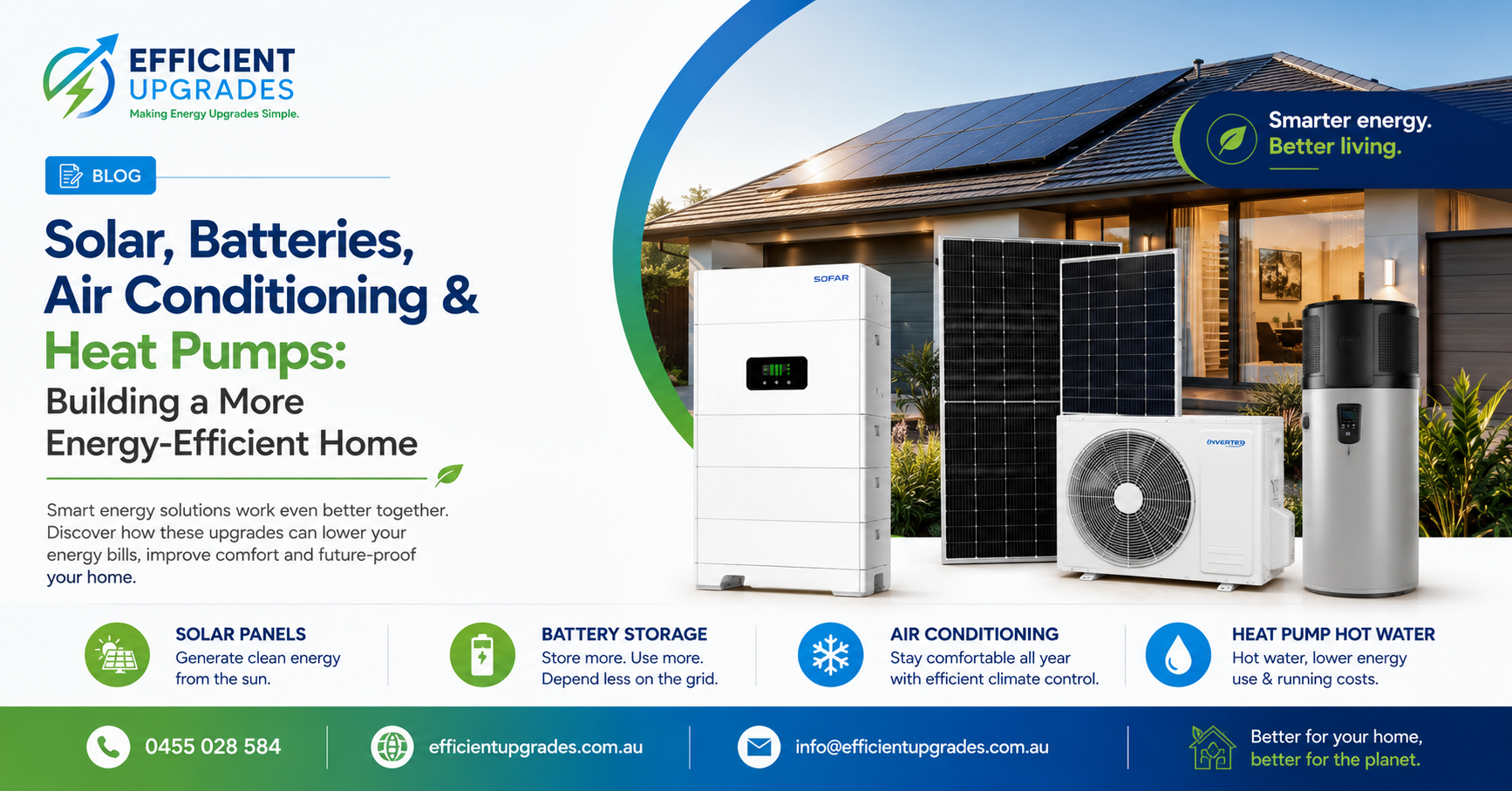
Creating an energy-efficient home is about more than installing solar panels. Modern homeowners can combine solar power, battery storage, efficient air conditioning and heat pump hot water to create a smarter and more comfortable home.
For Victorian households, these technologies can work together to help manage energy consumption, improve comfort and make better use of renewable energy.
At Efficient Upgrades, we help homeowners explore practical energy solutions that suit their property, lifestyle and energy needs.
What Makes a Home Energy Efficient?
An energy-efficient home uses less energy to provide the same level of comfort and functionality.
This can involve improving:
- Electricity generation
- Energy storage
- Heating and cooling
- Hot water efficiency
- Insulation
- Energy management
- Smart controls
Rather than looking at each upgrade separately, homeowners can consider how different technologies work together.
1. Solar Panels: Generate Your Own Energy
Solar panels are a popular starting point for improving household energy efficiency.
During daylight hours, solar panels convert sunlight into electricity that can be used to power appliances, lighting, heating, cooling and other household equipment.
Benefits of solar can include:
- Generate renewable electricity onsite
- Reduce reliance on grid electricity
- Potentially lower electricity costs
- Make use of Australia’s abundant sunshine
- Support a more sustainable household
However, solar generation is naturally dependent on sunlight. This is where battery storage can add another layer of flexibility.
2. Solar Batteries: Store Energy for Later
Solar panels generate electricity during the day, but households don’t always use all of that electricity immediately.
A solar battery can store suitable surplus solar energy for later use.
For example, excess solar generated during the afternoon could potentially be stored and used later when household electricity demand increases.
Solar + Battery
☀️ Generate → 🔋 Store → 🏠 Use Later
This can help households increase their solar self-consumption and reduce reliance on electricity from the grid.
Battery systems can also provide additional energy-management options, depending on the system and installation configuration.
3. Efficient Air Conditioning for Year-Round Comfort
Heating and cooling can be a significant part of household electricity consumption.
Choosing an efficient air conditioning system and using it appropriately can help manage energy consumption while maintaining indoor comfort.
Modern reverse-cycle air conditioning can provide both:
❄️ Cooling in summer
🔥 Heating in winter
For larger homes, ducted air conditioning with zoning can provide additional control by allowing homeowners to condition selected areas rather than the entire property.
For example, bedrooms can be prioritised at night while living areas can be used during the day.
4. Heat Pump Hot Water: A Smarter Approach to Hot Water
Hot water is another important household energy requirement.
A heat pump hot water system works differently from a conventional electric resistance hot water system. Instead of directly heating water using an electrical heating element as the primary process, it uses heat from the surrounding air and electricity to transfer that heat into the water.
This can provide an energy-efficient alternative for suitable homes.
Potential benefits include:
- Efficient hot water heating
- Reduced electricity consumption compared with some conventional systems
- Integration with broader home energy strategies
- Potential to use solar-generated electricity
The suitability of a heat pump depends on factors such as household hot water demand, installation location and existing system configuration.
How These Technologies Work Together
The biggest opportunity comes from thinking about your home as an integrated energy system.
Imagine a typical day:
Morning
The household begins using electricity for appliances, lighting and hot water.
Daytime
Solar panels generate electricity while the household is operating.
Afternoon
Excess solar generation can potentially charge the battery or power energy-intensive appliances.
Evening
Solar production decreases, while household electricity consumption may increase.
Stored battery energy can then potentially be used to help meet demand.
Throughout the Day
Efficient air conditioning and heat pump hot water systems can help manage heating, cooling and hot water requirements.
This creates a more connected energy strategy:
☀️ Solar → 🔋 Battery → ❄️ Air Conditioning → 💧 Heat Pump Hot Water
Why Combine Solar With a Heat Pump Hot Water System?
One of the advantages of combining technologies is the ability to use solar-generated electricity for other household energy requirements.
For example, a homeowner could schedule a heat pump hot water system to operate during periods when solar generation is available.
This can help increase the use of electricity generated onsite rather than relying entirely on grid electricity.
The ideal operating schedule depends on the home’s energy consumption, solar system and hot water requirements.
Solar Batteries and Air Conditioning
Air conditioning can place significant demand on a home’s electricity supply, particularly during Melbourne’s hot summer days.
Solar panels can generate electricity during daylight hours when cooling demand may also be high.
A battery can provide additional flexibility by storing suitable surplus solar energy for later use.
For homeowners with zoned ducted air conditioning, combining zoning with solar and battery storage can create an even more flexible energy strategy.
Creating a More Comfortable Home
Energy efficiency isn’t only about reducing electricity consumption.
A well-planned upgrade strategy can also improve everyday comfort.
Solar
Provides renewable electricity generation.
Battery
Provides energy storage and flexibility.
Air Conditioning
Provides heating and cooling.
Heat Pump Hot Water
Provides efficient hot water heating.
Together, these technologies can help create a home that is more efficient, comfortable and prepared for changing energy needs.
Consider Your Home as a Complete Energy System
Instead of asking:
“Which single energy upgrade should I install?”
It can be more useful to ask:
“How can the different energy systems in my home work together?”
For example, your energy strategy might include:
Solar Panels
↓
Generate renewable electricity
Battery Storage
↓
Store suitable surplus energy
Efficient Air Conditioning
↓
Manage heating and cooling
Heat Pump Hot Water
↓
Improve hot water efficiency
Smart Energy Management
↓
Coordinate when and how energy is used
This integrated approach can provide greater flexibility than considering each technology in isolation.
What Should Homeowners Consider Before Upgrading?
Every home is different, so there is no universal combination of technologies.
Before investing, consider:
Your Current Energy Usage
Review your electricity consumption and identify your largest energy loads.
Your Home’s Layout
Consider your home’s size, orientation, insulation and available installation space.
Your Daily Routine
When do you use the most electricity?
Existing Equipment
Your current solar, hot water and air conditioning systems may influence which upgrades are appropriate.
Future Energy Needs
Consider potential changes such as EV charging, additional appliances or household expansion.
System Compatibility
Different technologies need to work together correctly, particularly where solar, batteries and smart energy controls are involved.
Why Choose Efficient Upgrades?
At Efficient Upgrades, we believe energy upgrades should be straightforward.
We help Victorian homeowners explore:
☀️ Solar Panels
🔋 Solar Battery Systems
❄️ Air Conditioning
💧 Heat Pump Hot Water Systems
Our approach focuses on understanding your home’s requirements and helping you explore practical energy solutions.
Whether you’re looking to improve comfort, make better use of solar energy or plan a more energy-efficient home, we can help you understand your options.
Making Energy Upgrades Simple.
Frequently Asked Questions
Can solar panels, batteries and heat pumps work together?
Yes. These technologies can form part of an integrated home energy strategy. Solar can generate electricity, batteries can store suitable surplus energy, and efficient appliances can use that energy.
Can I use solar power for my heat pump hot water system?
Yes. A heat pump hot water system can potentially use electricity generated by your solar system. Scheduling hot water operation during periods of solar generation may help increase solar self-consumption.
Does a solar battery work with air conditioning?
It can, depending on the battery’s capacity, power output and system configuration. A professional assessment should determine whether the battery is suitable for your home’s air conditioning requirements.
Is ducted air conditioning energy efficient?
Modern ducted systems can be highly efficient when correctly sized, installed and operated. Zoning can also help avoid conditioning areas that aren’t being used.
Do I need a battery if I already have solar?
Not necessarily. The value of a battery depends on your electricity consumption, solar generation, operating patterns and energy goals.
Is a heat pump hot water system suitable for every home?
Heat pumps can be suitable for many homes, but factors such as hot water demand, available space, climate and installation requirements should be assessed before choosing a system.
What is the best way to make my home more energy efficient?
There isn’t one solution for every property. A combination of solar generation, battery storage, efficient heating and cooling, heat pump hot water and improvements to the home’s building efficiency may provide a stronger overall strategy.
Summary
Building a more energy-efficient home doesn’t have to mean relying on a single technology.
By combining solar panels, battery storage, efficient air conditioning and heat pump hot water, homeowners can create a more connected approach to energy generation, storage and consumption.
These upgrades can potentially help homeowners:
- Generate renewable electricity
- Store suitable surplus solar energy
- Improve solar self-consumption
- Manage heating and cooling more efficiently
- Improve hot water efficiency
- Reduce reliance on grid electricity
- Improve household comfort
- Prepare for future energy requirements
The right combination will depend on your home, lifestyle, existing equipment and energy consumption.
Efficient Upgrades can help you explore the options and build a smarter energy strategy for your home.
Contact Efficient Upgrades
Ready to make your home more energy efficient?
📞 0455 028 584
📧 info@efficientupgrades.com.au
🌐 efficientupgrades.com.au
Efficient Upgrades
Making Energy Upgrades Simple.