Energy efficiency is becoming increasingly important for Melbourne homeowners. Rising energy costs, stronger building standards and growing interest in renewable energy are encouraging households to look for practical ways to improve how their homes use and generate energy.
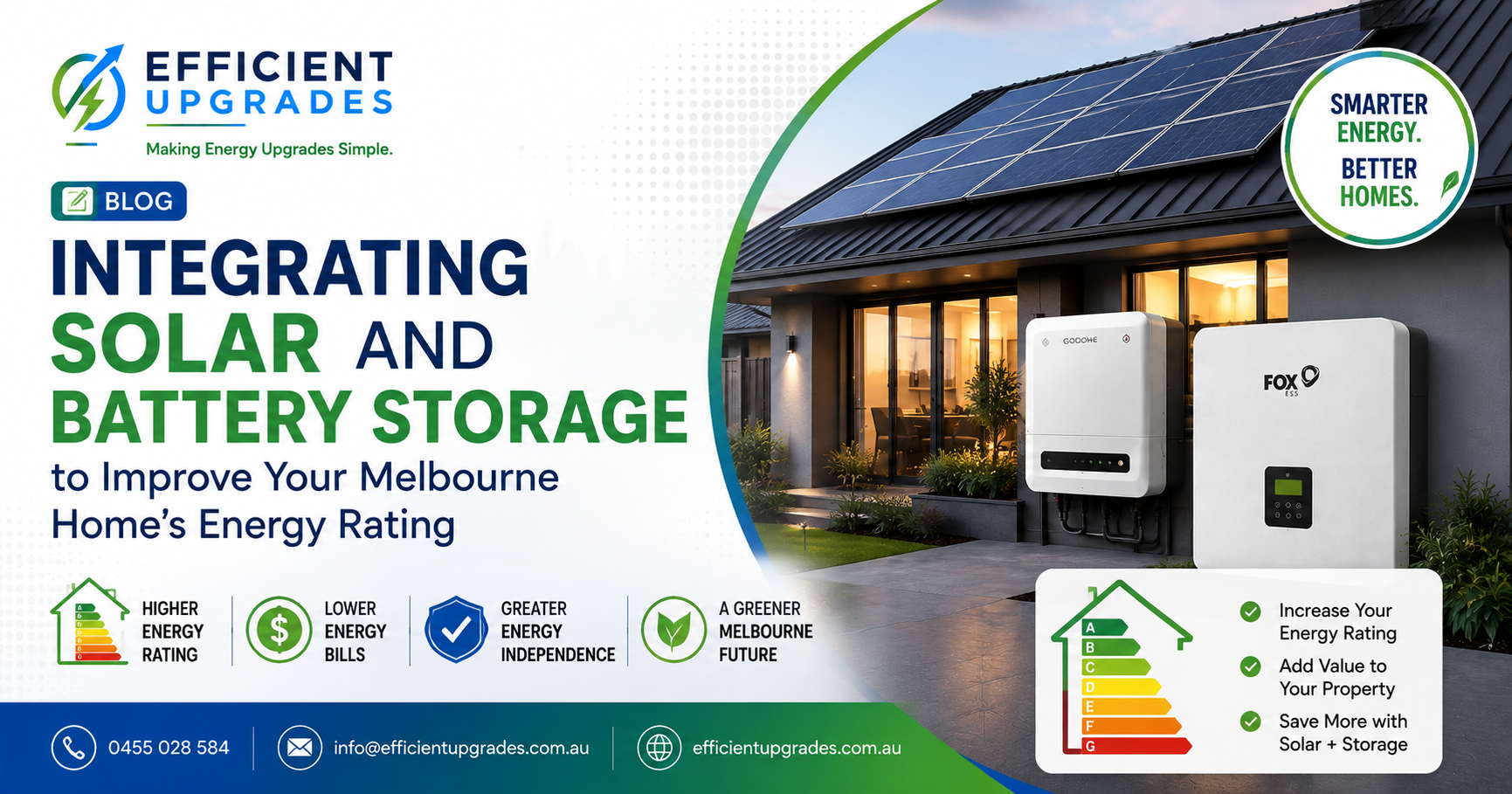
One of the most effective approaches is combining solar panels with battery storage. Solar panels generate renewable electricity during the day, while a battery can store surplus energy for later use. Together, these technologies can help reduce grid electricity consumption, improve energy self-sufficiency and contribute to a more energy-efficient home.
However, it is important to understand that solar panels and batteries do not automatically increase a home’s NatHERS star rating. A home’s formal energy rating considers several factors, including thermal performance and fixed energy use. Solar can play a role in meeting the Whole-of-Home energy budget for new homes, while battery storage can support broader energy management and future-proofing.
At Efficient Upgrades, we help Melbourne homeowners explore practical solar and battery solutions designed around their property’s energy requirements.
What Is a Home Energy Rating?
A home energy rating is an assessment of how efficiently a property performs from an energy perspective.
For new Victorian homes, the current building standards require a minimum 7-star NatHERS thermal performance rating, together with a Whole-of-Home annual energy use budget for fixed appliances such as heating, cooling, hot water and lighting. These requirements have applied in Victoria since 1 May 2024.
A home’s energy performance can be influenced by factors including:
- Building orientation
- Insulation
- Windows and glazing
- Shading
- Heating and cooling systems
- Hot water systems
- Lighting
- Rooftop solar
- Other fixed energy-consuming appliances
This means improving energy performance is about looking at the home as a complete system rather than relying on a single upgrade.
How Solar Can Support a More Energy-Efficient Home
Solar PV allows your home to generate electricity from sunlight rather than relying entirely on electricity purchased from the grid.
For new homes under Victoria’s Whole-of-Home requirements, rooftop solar can be used to offset remaining energy use after considering building thermal performance and efficient fixed appliances.
This makes solar an important component of an energy-efficient home design.
Benefits of solar include:
- Generating renewable electricity
- Reducing grid electricity consumption
- Lowering ongoing energy costs
- Supporting an all-electric home
- Helping offset household energy use
- Increasing household energy independence
Solar Victoria and the Victorian Government also recognise solar as an important part of Victoria’s transition towards cleaner and more efficient household energy.
Where Does Battery Storage Fit In?
Solar panels generate electricity primarily when the sun is shining. However, household electricity demand doesn’t stop when the sun goes down.
A battery helps solve this mismatch by storing surplus solar energy and making it available later.
For example:
☀️ Solar generation → 🔋 Battery storage → 🏠 Evening energy use
Instead of exporting all excess solar electricity during the day, a compatible battery system can store some of that energy for later household consumption.
Victoria’s energy strategy specifically highlights solar and batteries as technologies that can help households capture, store and manage their own energy.
Can a Battery Increase Your NatHERS Star Rating?
This is an important distinction.
A battery does not automatically add stars to a home’s NatHERS rating.
NatHERS thermal performance considers factors such as the building envelope, orientation, insulation, windows and heating and cooling requirements. Victoria’s Whole-of-Home assessment also considers the energy use of fixed appliances.
However, battery storage can complement solar and other energy-efficient technologies by helping a household make better use of renewable electricity.
For new homes, solar PV can be used to offset energy use within the Whole-of-Home budget, while batteries are identified by the Victorian Government as a technology that can help future-proof homes and manage energy use.
So, rather than viewing a battery as a direct “star rating upgrade”, it is more accurate to consider it part of a broader home energy strategy.
Solar + Battery: A Smarter Combination
Installing solar and battery storage together can provide benefits that neither technology can deliver on its own.
Solar Panels
Generate electricity from sunlight during the day.
Battery Storage
Stores surplus energy for later use.
Energy-Efficient Appliances
Reduce the amount of electricity your home needs to operate.
Efficient Building Design
Reduces the energy required for heating and cooling.
Together, these measures can create a more efficient and resilient household energy system.
Why Energy-Efficient Design Matters in Melbourne
Melbourne experiences both hot summers and cold winters, meaning heating and cooling can have a significant impact on household energy consumption.
A well-designed home can reduce the amount of energy required to maintain comfortable indoor temperatures.
Victorian guidance identifies measures such as:
- Appropriate building orientation
- Good insulation
- High-performance windows
- Effective shading
- Efficient heating and cooling
- Efficient hot water systems
- Rooftop solar
as important elements in achieving stronger home energy performance.
Solar and battery storage can then complement these measures by helping households generate and manage their electricity more efficiently.
Benefits of Combining Solar and Battery Storage
Lower Reliance on Grid Electricity
Using stored solar energy can reduce the amount of electricity your household needs to purchase from the grid.
Better Solar Self-Consumption
Instead of using solar electricity only when the sun is shining, battery storage can allow more of your generated energy to be used later.
Greater Energy Independence
Generating and storing electricity at home can give households greater control over where their energy comes from.
Improved Energy Management
Smart monitoring systems can help homeowners understand when electricity is being generated, stored and consumed.
Support for an All-Electric Home
Victoria is encouraging the transition towards efficient electric technologies. Combining solar with efficient electric appliances can help households make greater use of renewable electricity.
Potential Long-Term Savings
Using more of your own renewable energy can reduce your reliance on purchased grid electricity. Actual savings depend on your household’s consumption, solar generation, battery size, tariffs and system configuration.
What Other Upgrades Can Improve Home Energy Performance?
Solar and batteries are only part of the picture.
Homeowners looking to improve overall energy performance can also consider:
Better Insulation
Quality ceiling, wall and floor insulation can help reduce unwanted heat transfer.
Efficient Windows
High-performance glazing can improve thermal comfort and reduce heating and cooling requirements.
Efficient Heating and Cooling
Modern high-efficiency systems can provide comfortable indoor temperatures while using less energy.
Heat Pump Hot Water
Heat pump hot water systems can significantly improve hot water efficiency compared with conventional systems.
Smart Energy Management
Energy monitoring, timers and smart controls can help households understand and manage electricity consumption.
Efficient Lighting
LED lighting uses less electricity and can reduce ongoing household energy consumption.
Solar and Battery Storage for Existing Melbourne Homes
Energy efficiency isn’t only important for new homes.
Existing properties can also benefit from upgrading their energy systems.
The Victorian Government’s residential energy rating framework is expanding to existing homes through NatHERS, following the closure of the Residential Efficiency Scorecard program.
For homeowners considering an upgrade, a useful starting point is to understand how the property currently performs and identify the areas offering the greatest opportunity for improvement.
Depending on the home, this could include solar, battery storage, heating and cooling, hot water, insulation or other efficiency upgrades.
How to Plan a Solar and Battery Upgrade
Before purchasing a battery or expanding your solar system, consider your home’s actual energy requirements.
1. Review Your Electricity Usage
Look at how much electricity your home uses each day and when consumption is highest.
2. Assess Your Existing Solar System
If you already have solar, determine how much electricity it generates and how much surplus energy is available.
3. Consider Your Evening Usage
Battery storage can be particularly useful when household electricity consumption remains high after solar generation falls.
4. Choose an Appropriate Battery Size
A larger battery isn’t automatically better. The ideal capacity depends on your electricity usage, solar generation and energy goals.
5. Consider Future Requirements
Think about future additions such as electric vehicles, heat pumps, induction cooking or additional household appliances.
6. Get Professional Advice
A qualified installer can assess your property and recommend a system that is appropriate for your needs.
Why Choose Efficient Upgrades?
At Efficient Upgrades, we make energy upgrades simple.
We help Melbourne homeowners explore practical solutions across:
- Solar panels
- Solar battery systems
- Air conditioning
- Heat pump hot water systems
- Energy-efficient home upgrades
Our approach is focused on understanding your property’s requirements before recommending a solution.
Whether you’re building a new home, renovating an existing property or looking to reduce your electricity costs, we can help you explore the options available.
Frequently Asked Questions
Can solar panels improve my home’s energy rating?
Solar PV can contribute to meeting the Whole-of-Home energy budget for new Victorian homes by offsetting energy use. However, installing solar does not automatically increase the home’s NatHERS thermal star rating.
Does a solar battery increase NatHERS stars?
Not automatically. A battery should not be treated as a direct NatHERS star-rating upgrade. It can, however, complement solar generation and help manage household energy use.
Is solar required for a 7-star home in Victoria?
No. Solar PV is not mandatory under the minimum 7-star standards. Victoria’s Whole-of-Home budget can be achieved through a combination of building performance, efficient fixed appliances and renewable energy such as rooftop solar.
Why combine solar panels with a battery?
Solar panels generate energy during the day, while a battery can store surplus generation for later use. This can increase solar self-consumption and reduce reliance on grid electricity.
Can an existing Melbourne home benefit from solar and battery storage?
Yes. Existing homes can also use solar and battery systems to generate and store renewable electricity. The most suitable system depends on the property’s energy usage, solar potential and existing electrical infrastructure.
Should I install solar or a battery first?
It depends on your circumstances. If you don’t already have solar, installing a suitably sized solar system may be the starting point. If you already have solar, adding a battery may help you make greater use of surplus generation.
Can Efficient Upgrades help with solar and battery selection?
Yes. Efficient Upgrades can assess your energy requirements and help you explore suitable solar and battery solutions for your Melbourne property.
Summary
Integrating solar panels and battery storage can be an effective part of a broader strategy to improve your Melbourne home’s energy performance.
Solar allows your property to generate renewable electricity, while battery storage can help retain surplus energy for use when solar generation is lower. When combined with insulation, efficient heating and cooling, efficient hot water, high-performance windows and other energy-saving measures, these technologies can contribute to a more efficient and comfortable home.
For new Victorian homes, it is important to remember that solar and batteries do not automatically increase a NatHERS star rating. The current standards combine thermal performance with a Whole-of-Home energy budget, and rooftop solar can help offset remaining energy use.
The best approach is to assess the home as a complete energy system and choose upgrades based on the property’s specific requirements.
Contact Efficient Upgrades
Ready to make your Melbourne home more energy efficient?
Efficient Upgrades
📞 0455 028 584
📧 info@efficientupgrades.com.au
🌐 efficientupgrades.com.au
Contact Efficient Upgrades to discuss solar, battery storage and other energy-efficient solutions for your home.
Efficient Upgrades — Making Energy Upgrades Simple.